JapanReported

Five Jehovah's Witnesses say two prefectural hospitals refused to treat them unless they signed a blood-transfusion consent form, and are suing Okinawa Prefecture for about ¥16.74 million. Ryukyu Shimpo reported on 17 September 2026 that at the first hearing at the Naha District Court the prefecture asked for the claims to be rejected. The allegations are unproven.
· Updated September 19, 2026 · 7 min read
UkraineConfirmed

The Eighth Appellate Administrative Court in Lviv dismissed the appeal on 3 September 2026, leaving a Rivne judgment of 16 February 2026 in place. Both judgments record, as a fact no party disputed, that an official inspection found recruitment-centre officials in breach of the Commander-in-Chief's order of 16 December 2024 barring the detention and forced delivery of clergy of registered religious organisations. Neither court treated that as a reason to cancel the call-up, the unit posting or the cadet appointment, and neither returns to the finding after listing it. Police delivered the claimant on 22 April 2025; medical board, summons, call-up order and unit posting all followed within 48 hours.
· September 3, 2026 · 20 min read
UkraineConfirmed

Five men who refused a mobilisation call-up each drew three years, four of them suspended. The two the army had already taken in drew five years, neither suspended — one a man posted as a cook in a supply section, who told the Stryi court he had applied for alternative service in 2022. All are trial-court verdicts, and only one is recorded as having taken legal effect.
· September 7, 2026 · 12 min read
UkraineConfirmed

On 19 August 2026 the Eighth Appellate Administrative Court in Lviv dismissed a Jehovah's Witness ministerial servant's challenge to his mobilisation call-up, holding that the statutory grounds for deferment are an exhaustive list he did not fall within — while finding, and not acting on, the recruitment centre's failure to decide his application at all. Three months earlier the same court quashed another Witness's call-up order, not on religious grounds but because a recruitment centre had exceeded its powers. And in April, in a judgment that is final and unappealable, a Kyiv panel held that Ukraine's alternative-service law is not clearly confined to peacetime conscription, absent any statutory restriction on that service — the proposition both Lviv panels treated as settled. No Supreme Court ruling reconciling them was found in the judgment-register searches this article describes.
· August 19, 2026 · 22 min read
UkraineConfirmed

In a final ruling of 19 August 2026, a panel of the Cassation Criminal Court upheld the conviction of a baptised Witness deacon under Article 336 for refusing a call-up notice, then released him from serving his three-year term on two years' probation. The precedent it applied — that belief is no answer to a mobilisation charge — is one two Supreme Court judges dissented from, that panels of the court tried three times to reopen, and whose underlying statutes four constitutional complaints were challenging as of the Court's notice of 6 May 2026. The same precedent holds that call-up during mobilisation does not cancel an objector's right to refuse to carry or use a weapon.
· August 19, 2026 · 14 min read
BrazilConfirmed

On 28 August 2026 the STF's president, Edson Fachin, put ADPF 618 and ADPF 642 on the plenary calendar for 30 September. The merits judgment opened in a virtual session in 2025 and has been suspended twice by justices asking to study the file; the dockets record two justices' positions. Watch Tower Bible and Tract Society of Pennsylvania and the Associação das Testemunhas Cristãs de Jeová are admitted friends of the court in ADPF 618.
· August 28, 2026 · 10 min read
UkraineConfirmed

In Barsuk and Gyl v. Ukraine, a unanimous Fifth Section Chamber held that Ukraine breached Article 3 and Article 9, each taken with Article 14, by describing the attacker's motive with a stock legal formula and letting the five-year prosecution deadline expire. The Court did not decide why the attack happened — only that Ukraine never seriously tried to find out. Each applicant was awarded EUR 4,000.
· July 9, 2026 · 17 min read
Kuzminsky District Court of MoscowConfirmed

The Kuzminsky District Court of Moscow granted a claim by Russia's Prosecutor General's Office on 31 July 2026, declaring void sixty donation agreements signed between August 2016 and early April 2017 and transferring 63 buildings and 60 land plots into state ownership. Prosecutors argued the transfers were made to keep the property from passing to the state when the organization was liquidated, and the court accepted that case; Kommersant and Pravo.ru report the defendants were Witness-linked entities in seven European countries and the United States, while other outlets described only a Swedish entity. Russian courts undid a Witness property transfer in much the same shape in 2017, against the organization's St Petersburg headquarters, and Russia has legislated against enforcing the European Court of Human Rights judgment that found the 2017 ban and liquidation unlawful. Jehovah's Witnesses have since responded, calling the confiscation defiance of that judgment, putting the assessed value of the 123 properties at about 415 million rubles, and saying the European entities that owned them were refused permission to take part in the 2017 liquidation proceedings.
· Updated August 9, 2026 · 9 min read
D.D.C. No. 24-cv-02523Confirmed

A federal judge in Washington threw the case out in September 2025 — not on its merits, but because the lawsuit papers had never been validly delivered. On 23 July 2026 he undid that dismissal, giving the Jehovah's Witnesses' Pennsylvania corporation 180 days to serve the Russian Federation, its health ministry and the state institute now using the site, this time through diplomatic channels. Documents filed with the complaint valued the property at more than $30 million. As of that opinion the court had decided nothing about whether a U.S. court can hear the claim at all.
· July 23, 2026 · 9 min read
D.N.J. No. 25-cv-01459Confirmed

A federal judge dismissed the congregation's bid to escape a 1999 payment-in-lieu-of-taxes deal on its Turnersville assembly hall, ruling only that a federal court is the wrong forum — she decided nothing about whether the hall is tax-exempt. The congregation appealed, then dropped the appeal on 21 July 2026, the day its opening brief was due, leaving that dismissal to stand.
· Updated July 25, 2026 · 12 min read
UN Working Group on Arbitrary DetentionConfirmed

Opinion No. 30/2026 finds the detentions arbitrary under categories I, II and V and recommends release plus compensation. Russia responded nine days after the deadline, citing the extremism designation; the panel could not accept the reply as timely. The opinion is not binding, and the Working Group made no finding of torture or unfair trial.
· March 30, 2026 · 10 min read
RussiaConfirmed

The Committee's 13 March 2026 ruling found unlawful arrest, religious discrimination and denial of minority rights in a 2018 Ufa case, and ordered unspecified compensation. It also dismissed several claims, refused an earlier emergency request, and has no power to enforce anything.
· March 13, 2026 · 13 min read
The Swedish thread mirrors Norway's: whether a state may withhold public funding from a religious group over its internal membership and shunning practices.Confirmed

Sweden's Agency for Support to Faith Communities (SST) ruled on 24 October 2025 that Jehovah's Witnesses failed new 'democracy conditions' for state grants, citing shunning and membership limits. On 7 May 2026 the Stockholm Administrative Court overturned the denial and ordered the grant restored; the agency has appealed.
· October 24, 2025 · 4 min read
A duty judge authorized transfusions on the basis of a fax the Court found 'very limited, incorrect and incomplete.'Confirmed
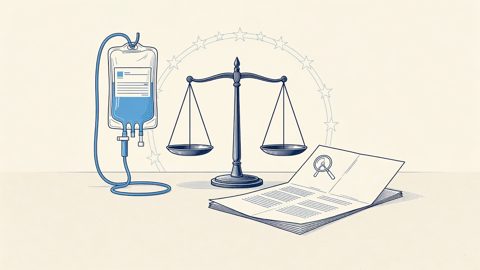
In Pindo Mulla v. Spain, the ECHR Grand Chamber unanimously found that Spain breached Rosa Edelmira Pindo Mulla's rights when a duty judge authorized three transfusions during emergency surgery despite her advance written refusals. The Court faulted the decision-making process, not the doctors' medical judgment.
· September 17, 2024 · 8 min read
RulingConfirmed

The European Court of Human Rights ruled on 9 May 2023 that Finland may require Jehovah's Witnesses to obtain householder consent before noting personal data during their ministry — no violation of Articles 9 or 6.
· May 9, 2023 · 3 min read
CensorshipConfirmed

In 2017 a Russian court declared the Witnesses' New World Translation "extremist" — sidestepping a law that protects scripture by accepting expert testimony that the translation was not really a Bible.
· August 17, 2017 · 5 min read
RulingConfirmed

In April 2026 Norway's highest court ruled the state acted unlawfully when it deregistered Jehovah's Witnesses and cut their funding over shunning. The justices were unanimous that the state had not shown harm to children — and split only on a separate question about adults. It was the end of a five-year fight, and part of a wider European reckoning.
· April 29, 2026 · 9 min read
Religious freedomConfirmed

A 2017 Supreme Court ruling outlawed the organization nationwide, liquidated 395 local entities, and seized property — without a single finding of violence. Europe's top human-rights court later called the whole campaign unlawful, but Russia, by then out of the Council of Europe, refused to comply.
· April 20, 2017 · 12 min read